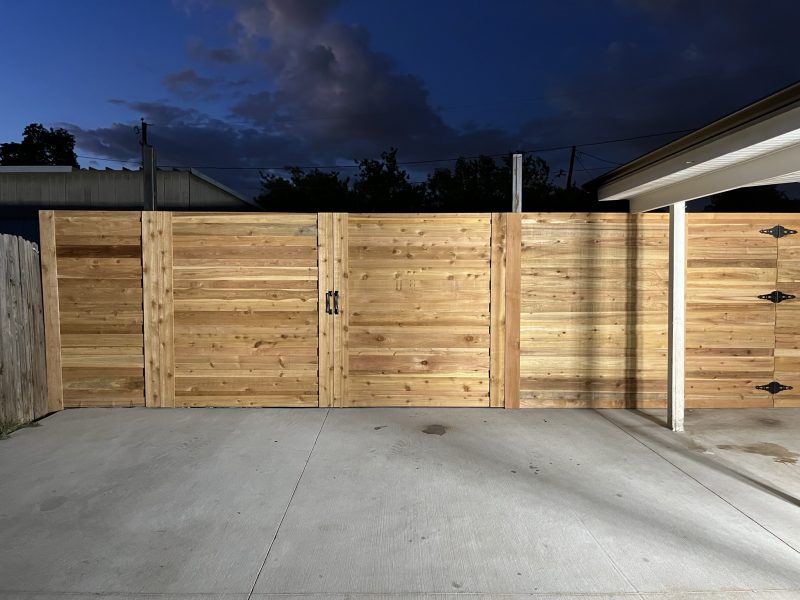
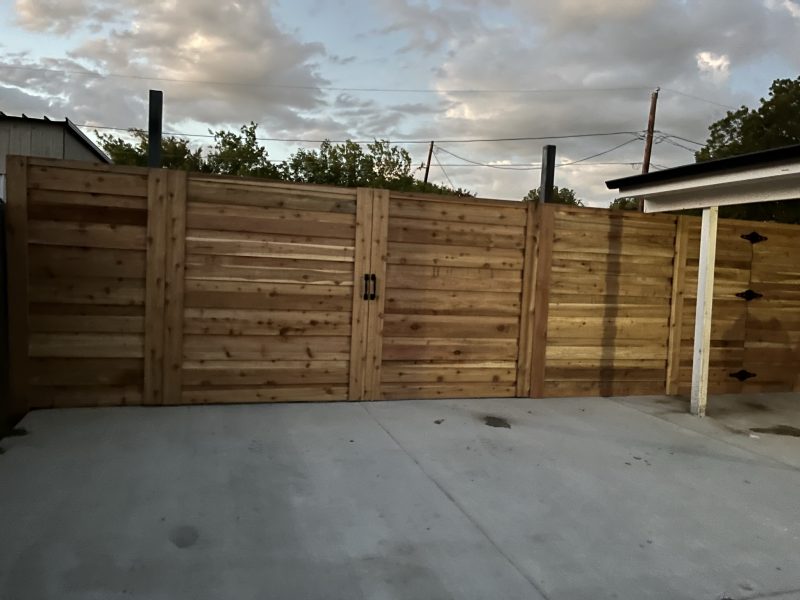
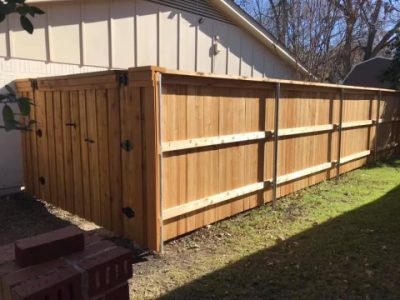
Fence failures are almost always post failures. Posts set too shallow, set in dirt instead of concrete, or spaced too far apart for the panel — and after two summers of clay movement, the whole run leans.
We lay out the line, call for utility locates, set posts at the right depth in concrete, and build the panels straight with proper bracing and hardware. If you have an HOA, we build to the approved height and style.
What’s included
Every fencing quote is built from these pieces. Anything outside the scope is written on the quote as an exclusion, so you are never guessing what you bought.
- Layout, utility locate and property line review
- Posts set in concrete at proper depth
- Cedar, composite or metal panels
- Gates, frames, hinges and latches
- Staining and sealing options
- Removal and haul-off of the old fence
What drives the price
We do not publish a fake flat price, because two fencing jobs on the same street can differ by thousands. These are the variables that move the number — you will see them broken out on your quote.
Linear feet
Fencing is priced by the foot, so the run length is the starting number for any quote.
Material
Cedar is the value choice, composite lasts longest, and ornamental metal costs more but needs almost no upkeep.
Height and gates
Six-foot and eight-foot runs need more material and bracing; each gate adds framing and hardware.
Tear-out and terrain
Removing an old fence, working on slopes, or setting posts through rock all add time.
How the job runs
1. Free walk-through. We come to you, look at the space and talk through options. No pressure and no deposit to get a number.
2. Written quote. Itemized scope, materials named, price held. You approve it before anything is ordered.
3. We build. Crew on site, site protected, updates as we go. If something changes behind a wall, you see photos and a price before we continue.
4. Final walk. We finish the punch list with you, clean up, and leave the warranty and care notes behind.